What to Do If Someone Sues You Without Evidence in Florida?
 By
Editor Team
By
Editor Team
The Best Attorney USA Editorial Team is dedicated to bringing transparency and clarity to the American legal landscape. Composed of legal researchers,...
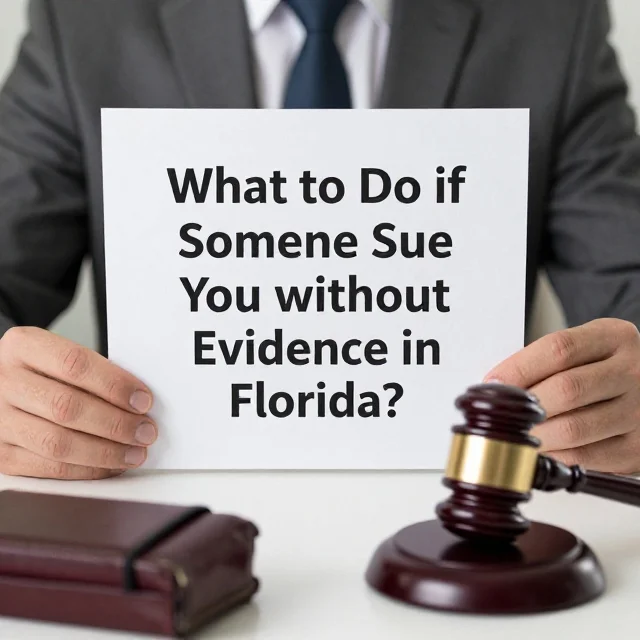
Being served with a lawsuit in the Sunshine State can be overwhelming, especially if the claims are baseless. However, Florida law has specific protections for defendants facing frivolous or unproven lawsuits. If someone sues you without evidence in Florida, you must follow the correct legal procedures to get the case dismissed.
Here is your step-by-step guide to defending yourself under Florida Civil Law.
1. Respond Within 20 Days
In Florida, once you are served with a summons and complaint, you typically have only 20 calendar days to file a written response with the court.
Warning: If you miss this deadline, the plaintiff can file for a "clerk’s default," which could lead to a final judgment against you regardless of the evidence.
2. File a Motion to Dismiss (Florida Rule 1.140)
If the lawsuit lacks a legal basis or fails to provide clear facts, your attorney can file a Motion to Dismiss. Under Florida Rules of Civil Procedure, you can argue that the complaint is "legally insufficient." If the judge finds that the plaintiff hasn't stated a valid claim under Florida law, the case may be dismissed before it even reaches trial.
3. Invoke Florida Statute 57.105 (Sanctions for Frivolous Lawsuits)
This is your strongest weapon in Florida. Florida Statute 57.105 allows a judge to award attorney’s fees and court costs to the winning party if the court finds that the losing party (the plaintiff) knew or should have known that their claim was:
Not supported by the material facts.
Not supported by the application of then-existing law.
By serving a "Safe Harbor" notice under this statute, you give the plaintiff 21 days to withdraw their baseless lawsuit, or face paying your legal bills.
4. Utilize the Discovery Phase
In Florida, "Discovery" allows you to force the plaintiff to show their hand. You can use:
Interrogatories: Written questions the plaintiff must answer under oath.
Requests for Production: Demanding the physical evidence or documents they claim to have.
Depositions: In-person questioning under oath. If they have no evidence, this process will formally document their lack of proof for the judge to see.
5. Motion for Summary Judgment (Rule 1.510)
Florida recently updated its Summary Judgment rules to align with the federal standard. If the discovery process proves there is "no genuine dispute as to any material fact," you can ask the judge to rule in your favor immediately. This avoids the cost and stress of a full trial.
Conclusion
A lawsuit without evidence is a serious threat, but Florida's legal system provides tools like Rule 1.140 and Statute 57.105 to protect you. The most important thing is to act within the 20-day window and consult with a qualified Florida attorney.
Legal Disclaimer: This article provides general information and is not legal advice. Laws can change, and every case is unique. Always consult with a licensed Florida attorney regarding your specific situation.
Consult an Expert
These experienced attorneys can help you with matters related to this topic.
Attorney at Law
Insurance Law
A Alan Manning
Real Estate
A Brian Phillips
Criminal
A Christopher Kasten
Appeal
A Elizabeth Goings
Business And Corporate
A G Condon Jr
Litigation
A Graham Allen
Business And Corporate
A James Rolfes
Insurance
A Jeffry Robinson
Business And Corporate (securities Law)
A Kevin Houston
Insurance
A Melissa Holley
Bankruptcy
A Renee Preston
Business And Corporate (securities Law)
A Russell Bobo
Civil Rights
A. Brian Albritton
Qui Tam Law
A. Christopher Kasten II
Commercial Litigation
A. Dax Bello
Personal Injury Litigation - Plaintiffs
Frequently Asked Questions
Need Legal Assistance?
Our experienced attorneys are ready to help you with your legal matters. Get personalized consultation today.
Get ConsultationRecent Posts
5 Defining Civil Litigation Cases of 2026: How Leaders Must Adapt to AI, Trade
Jun 21, 2026
5 Defining Civil Litigation Cases of 2026: How Leaders Must Adapt to AI, Trade, and Regulatory Shifts
Feb 23, 2026

Top 10 Best Personal Injury Attorneys in Los Angeles, CA (2026)
Feb 22, 2026
The 2026 USA Visa Outlook: Key Changes to H-1B, Green Cards, and Work Authorization
Feb 08, 2026
Divorce in the Digital Age: How to Protect (and Split) Crypto, NFTs, and Digital Businesses
Feb 08, 2026